



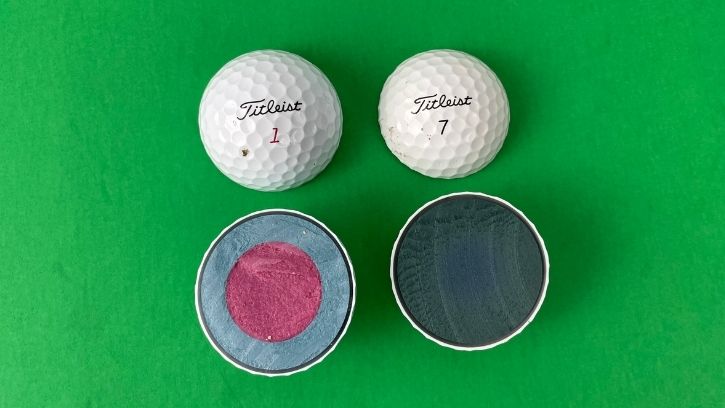
Golfers often focus on drivers, irons, and putters when looking for performance gains, but the golf ball itself plays a central role in every shot. Advances in ball engineering have made layered construction one of the biggest differentiators in modern performance. Among the most advanced designs available today are 4 piece golf balls, which are built to deliver a precise blend of distance, spin control, and greenside feel for players who want complete performance across the bag.
Unlike basic two-piece balls that emphasize durability and straight flight, four-piece designs use multiple performance layers that activate differently depending on club speed and impact conditions. This allows the ball to respond optimally whether it’s struck with a driver, mid-iron, or wedge.
Understanding 4-Piece Construction
A four-piece golf ball is built with a core plus three additional functional layers. Each layer has a specific job rather than trying to deliver all performance traits at once.
The inner core is designed for energy transfer and ball speed. Around it sits a secondary mantle layer that helps regulate compression and launch. A third layer further fine-tunes spin separation — keeping driver spin lower while allowing higher spin with shorter clubs. The outer cover, often made from cast urethane, is engineered for greenside control and soft feel.
This separation of responsibilities is what allows four-piece balls to produce both long distance and high short-game spin — two traits that are difficult to combine in simpler constructions.
Distance and Speed Off the Tee
With a driver, higher swing speeds compress deeper into the ball structure. In a four-piece design, the inner core and mantle system work together to maximize rebound while keeping excess spin in check. Lower driver spin helps reduce ballooning and promotes a more penetrating flight.
For stronger players, this can translate into measurable yardage gains and tighter dispersion. The benefit is not just raw distance, but more efficient distance — shots that carry and roll with better consistency.
Because the layers are tuned individually, engineers can design for speed without sacrificing feel in other parts of the game.
Iron Control and Spin Separation
Approach shots are where layered construction becomes especially valuable. Mid- and short-iron impacts engage different layers than driver strikes. A four-piece ball can increase spin responsiveness with scoring clubs while maintaining stable flight windows.
This creates more predictable carry numbers and better stopping power on greens. Instead of choosing between a “distance ball” and a “control ball,” golfers get a balanced response built into the structure.
Spin separation — low with the driver, higher with wedges — is one of the defining performance advantages of multi-layer tour balls.
Greenside Feel and Short-Game Precision
The outer urethane cover found on many four-piece balls is a major contributor to short-game performance. Urethane is softer and higher-friction than ionomer covers, allowing grooves to grip the ball more effectively on chips, pitches, and bunker shots.
This added friction increases spin potential and improves check on landing. Players gain more control over rollout and trajectory, which supports aggressive scoring strategies around the green.
Putting feel also tends to be more consistent with urethane-covered balls, offering clearer feedback and better distance control.
Who Should Consider Playing a 4-Piece Ball
Four-piece golf balls are often associated with elite players, but they are not limited to professionals. They are best suited for golfers who generate moderate to high swing speeds and want full-spectrum performance rather than a single-benefit design.
Competitive amateurs, low-handicap players, and improving mid-handicappers often see the greatest gains. Golfers focused on approach precision and short-game scoring typically appreciate the added spin and feel characteristics.
Players with slower swing speeds may not fully compress all layers, but many still prefer the short-game response — making personal testing important.
Choosing Based on Performance, Not Labels
The number of layers alone should not be the only deciding factor, but it is a strong indicator of design intent. Golfers should evaluate launch, spin, feel, and consistency during real play rather than relying only on marketing categories.
On-course testing over multiple rounds provides better insight than a few range shots. Using the same model consistently also improves feedback and decision-making because ball behavior becomes more predictable.
Final Thoughts
Modern golf ball engineering allows players to fine-tune performance in ways that were not possible a generation ago. Multi-layer construction — especially four-piece design — gives golfers the ability to combine driver efficiency with scoring-zone control. For players serious about optimizing every club in the bag, ball selection deserves equal attention.
Golfers looking for tour-influenced engineering and performance-driven design should review the latest models from Snell Golf and test a four-piece construction ball to see how much difference advanced layering can make in real scoring situations.
