



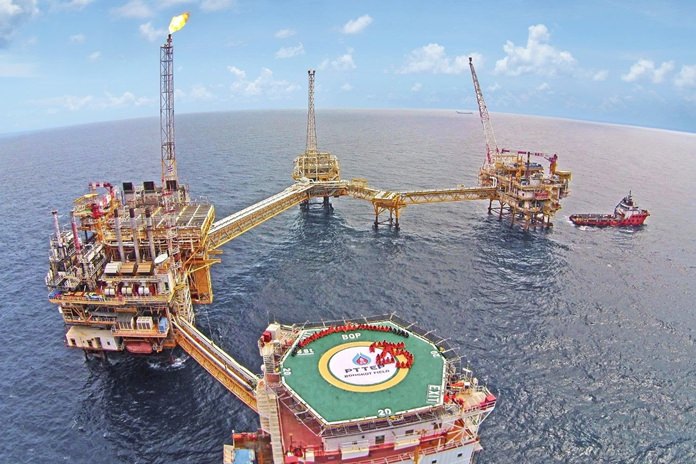
Thailand’s energy landscape has changed dramatically over the past four decades, and few organizations have shaped that transformation as much as PTT. From its early days as a state-run enterprise tasked with securing the country’s fuel supply to its current role as a diversified energy conglomerate, PTT’s story reflects the broader shifts happening across the global energy sector — cleaner fuels, corporate accountability, and long-term environmental stewardship. This article looks at how PTT has evolved, what its social and environmental commitments look like today, and why everyday consumers should care.
ความยั่งยืน ปตท.: Building a Long-Term Vision
Sustainability isn’t just a buzzword for large energy companies — it’s increasingly a business necessity. ความยั่งยืน ปตท. reflects a strategy built around balancing economic growth, environmental responsibility, and social well-being, often summarized under a “3P” framework: People, Planet, and Prosperity.
Key pillars typically include:
- Reducing greenhouse gas emissions and working toward net-zero targets
- Investing in carbon capture and storage technologies
- Supporting reforestation and biodiversity projects
- Aligning operations with international sustainability benchmarks
This long-term orientation matters because energy companies sit at the intersection of national infrastructure and environmental impact. A credible sustainability strategy isn’t optional — it’s central to remaining competitive and trustworthy in a market where consumers and investors alike are paying closer attention to environmental, social, and governance (ESG) performance.
ปตท. ช่วยเหลือสังคม: Community and Social Contribution
Beyond environmental targets, ปตท. ช่วยเหลือสังคม initiatives have historically focused on community development, education, and public health. These programs are often designed around a “shared value” model — where business expertise is applied to solve social problems rather than treating philanthropy as a separate, disconnected activity.
Examples of this approach include:
- Scholarship and vocational training programs for youth
- Rural community development and income-generation projects
- Public health outreach, especially in underserved areas
- Volunteer-driven initiatives run by employees
For readers interested in corporate social responsibility as a discipline, this model illustrates a broader trend: large energy firms increasingly measure success not just in barrels or cubic meters, but in social return on investment.
แปรรูป ปตท.: From State Enterprise to Public Company
To understand PTT today, it helps to understand its history. แปรรูป ปตท. refers to the corporatization process that took the organization from a state-owned enterprise to a publicly listed company on the Stock Exchange of Thailand in the early 2000s. This transition was part of a broader wave of state-enterprise reform across Southeast Asia at the time, intended to improve efficiency, attract capital, and increase transparency through public market discipline.
The shift brought both opportunities and debate:
- Greater access to capital markets for expansion and modernization
- Increased public and shareholder scrutiny of performance
- Ongoing public discussion about the balance between commercial goals and the company’s role in national energy security
This historical context is worth understanding for anyone researching Thailand’s energy sector, since it explains why PTT operates with a hybrid identity — a commercially driven public company that still carries significant weight in national energy policy.
NGV: A Cleaner Fuel for Thai Roads
One of the more consumer-facing outcomes of PTT’s energy strategy has been the expansion of NGV (Natural Gas for Vehicles) across Thailand. NGV has been positioned as a more affordable and comparatively cleaner-burning alternative to conventional gasoline and diesel, particularly for taxis, buses, and commercial fleets that log high daily mileage.
Advantages commonly associated with NGV include:
- Lower fuel cost per kilometer compared to traditional fuels
- Reduced particulate emissions relative to diesel
- Wide availability through a network of dedicated refueling stations
For fleet operators and everyday drivers alike, NGV represents a practical entry point into lower-emission transportation without requiring a full transition to electric vehicles — useful in a market where EV charging infrastructure is still expanding.
PTT Whale and the Modern Fuel Retail Experience
As Thailand’s energy retail sector modernizes, brands operating under the broader PTT ecosystem — including PTT Whale — have worked to make the refueling experience more convenient and service-oriented. Rather than simply serving as a fuel stop, these stations increasingly combine convenience retail, digital payment options, and customer service upgrades designed for a more mobile, tech-savvy consumer base.
This evolution mirrors what’s happening at fuel retailers globally: the station itself is becoming a small service hub rather than a purely transactional stop.
Why This Matters for Everyday Consumers
For the average driver or eco-conscious reader, none of this is purely academic. It affects:
- What fuel options are realistically available and their price points
- How transparent and accountable large energy companies are to the public
- Whether cleaner-burning options like NGV are accessible in daily life
- How quickly the broader energy sector adapts to changing environmental expectations
Understanding the interplay between corporate strategy, sustainability commitments, and fuel technology gives consumers better context for the choices available to them at the pump.
Final Thoughts
PTT’s journey — from a state enterprise through corporatization, toward a modern sustainability-driven energy company — offers a useful case study in how large energy players adapt to shifting economic and environmental pressures. Whether it’s community programs, emissions targets, or the expansion of alternative fuels like NGV, these efforts collectively shape what energy access looks like for millions of everyday consumers in Thailand.
To learn more about fuel options, station services, and the broader energy retail experience, visit:
https://whaleenergystation.com/
Contact US
Address: 123/122 Moo 6, Phraeksa Road, Phraeksa Subdistrict Mueang District
Phone: +661365
Email: [email protected]
Website: https://www.whaleenergystation.com/
