



BLS Online Certificate: What Basic Life Support Covers and Who Needs It
Basic Life Support sits a level above the CPR most people learn as bystanders, and the distinction is more than a matter of depth. Anyone researching a BLS online certificate should understand both what the curriculum contains and how the credential functions in clinical settings, because those are separate questions and the second one has a firm answer that depends entirely on who is asking you for it.
What BLS adds
Lay CPR teaches a single rescuer to keep someone alive alone. BLS assumes you will be working in a team with equipment.
The curriculum covers high-quality compressions measured against explicit depth and rate targets, with attention to compression fraction, meaning the proportion of time hands are actually on the chest. It adds two-rescuer sequences, including the rotation of compressors roughly every two minutes to counter the fatigue that quietly degrades depth. It covers bag-mask ventilation, which is a genuine skill rather than an obvious one, and pulse assessment, which lay rescuers are specifically taught to skip.
It also covers team dynamics: clear role assignment, closed-loop communication, and structured handover. The 2025 resuscitation guidelines revision also brought a revised chain of survival and new guidance on opioid-related emergencies, both of which belong in current BLS content.
Who needs the credentialed version
For clinical roles, BLS is a gatekeeping credential rather than a nice-to-have. Nursing programs require it before students may enter clinical rotations. Hospitals require it at hire and continuously. EMS agencies, dental practices, and many allied health employers specify it too.
In those settings, the certificate must include a live skills assessment conducted by an instructor, whether in a classroom or through an approved virtual session with a manikin. Employers and credentialing offices verify this, and a knowledge-only certificate will generally not be accepted.
The practical instruction is simple: if a hospital, school, board, or employer is the reason you are certifying, ask them exactly which credential they accept before you pay for anything. Requirements are set by facilities and programs rather than by any single national rule, and they vary.
What online BLS study is genuinely good for
Several situations where online study delivers real value:
Preparation. Arriving at a skills session already fluent in the theory means the in-person time goes entirely to hands-on practice rather than lecture.
Refresher between renewals. Cards typically run two years. Competence does not.
Non-clinical staff in clinical environments. Reception, administration, facilities, and support staff often want BLS-level knowledge without holding a credentialed role.
High-risk caregiving. People caring at home for someone with a cardiac or respiratory condition frequently want clinical-grade knowledge, and no credentialing body is involved.
The retention problem is sharper here
Skill decay after resuscitation training is well documented, with measurable decline within three to six months. BLS is more vulnerable than lay CPR because the sequences are more complex. Bag-mask technique degrades quickly. Team role assignment is the first thing to collapse under stress. A two-year card describes an administrative term, not a competence window.
The remedy is inexpensive. Review the sequences once or twice between renewals rather than nothing until the card expires. Any rehearsal beats none.
What to look for
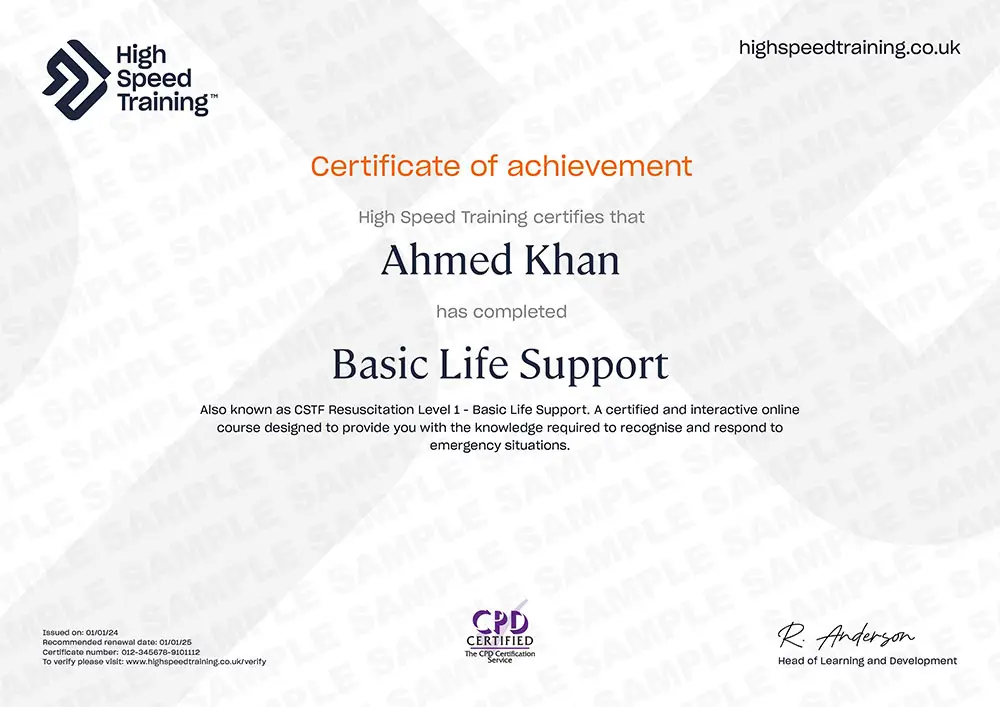
Content built on the current 2025 guidelines rather than the 2020 edition. Honest course length. A verifiable certificate showing name, date, and expiry. And a provider who states plainly where the credential is accepted rather than implying universal acceptance.
The Basic Life Support material at Simple CPR is self-paced and built for the theory side of that equation, which makes it well suited to preparation, refresher study, and anyone who wants clinical-grade knowledge without a credentialing requirement attached. Know what you need the certificate to do before you choose the course.
