



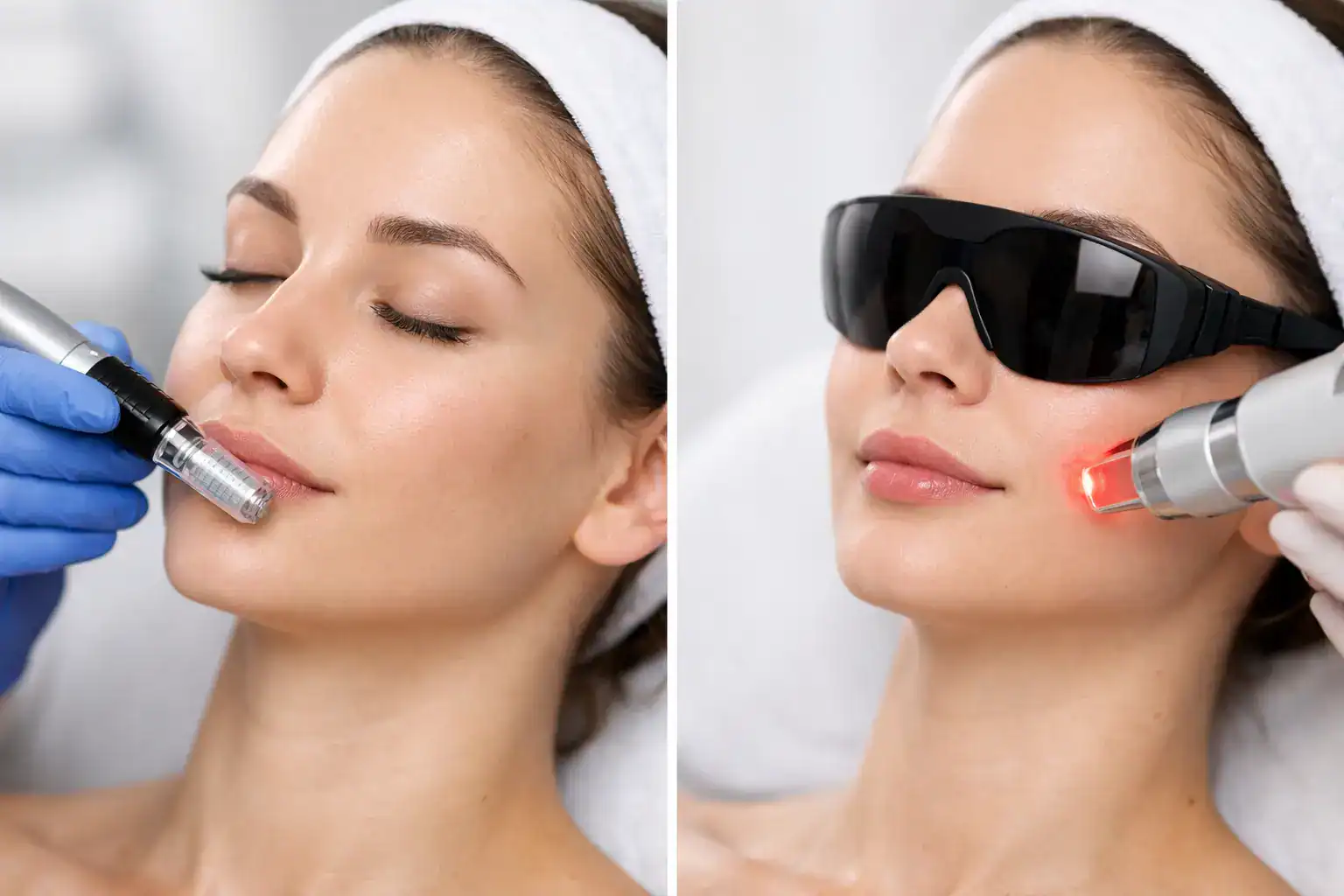
Skin rejuvenation has evolved far beyond basic creams and facials. Today, treatments such as microneedling and laser resurfacing can address acne scars, uneven texture, fine lines, sun damage, and other visible signs of skin aging. But when comparing the two, an important question remains: which treatment works better?
The answer is not the same for everyone. Both procedures stimulate collagen production and encourage skin renewal, but they work through different mechanisms and offer different recovery experiences. Recent research comparing fractional CO₂ laser and needling-based treatments suggests that both can produce meaningful improvements, while the best option depends on skin type, treatment goals, scar characteristics, and tolerance for downtime.
How Microneedling Works
Microneedling uses very fine needles to create controlled microscopic injuries in the skin. These tiny channels activate the body’s natural healing response, encouraging collagen and elastin production. As new collagen develops, the skin can gradually become smoother, firmer, and more even in appearance.
One of the major advantages of traditional microneedling is that it does not intentionally remove the surface layer of skin. This can make it an attractive option for people who want gradual improvement with comparatively limited recovery.
Microneedling may be considered for concerns such as mild acne scarring, enlarged-looking pores, uneven texture, and early signs of aging. Several sessions are commonly needed because collagen remodeling takes place progressively rather than immediately.
What Makes Laser Resurfacing Different?
Laser resurfacing uses concentrated light energy to create controlled thermal injury in targeted areas of the skin. Fractional CO₂ laser resurfacing is an ablative technique that removes microscopic columns of tissue while leaving surrounding areas intact. The resulting healing process stimulates collagen remodeling and new skin formation.
Because fractional CO₂ laser treatment can produce a stronger resurfacing effect, it may be particularly useful when treating more pronounced texture irregularities, deeper acne scars, or certain signs of photoaging. However, greater treatment intensity can also mean more redness, sensitivity, and recovery time.
Research published in 2026 has found that fractional CO₂ laser can provide strong improvement in atrophic acne scars, although its benefits need to be balanced against risks such as post-inflammatory hyperpigmentation and longer recovery.
Which Treatment Gives Better Results?
There is no universal winner. A 2026 systematic review and meta-analysis examining fractional CO₂ laser and needling-based treatments found broadly comparable overall improvement in atrophic acne scars, although some measures favored CO₂ laser. The researchers emphasized that factors such as skin type, scar characteristics, and potential complications should influence treatment selection.
Another 2026 meta-analysis focusing specifically on fractional CO₂ laser versus radiofrequency microneedling found somewhat greater scar improvement and satisfaction with fractional CO₂ laser, while radiofrequency microneedling offered better tolerability and a more favorable safety profile.
This highlights an important point: better results on paper do not necessarily mean a treatment is better for every individual.
Microneedling May Be Better for Gradual Improvement
Microneedling can be appealing for people who prefer a less aggressive approach. Because it focuses on controlled micro-injuries rather than extensive resurfacing, it may offer a more gradual route toward improved texture and collagen production.
It can also be useful when a person has limited flexibility for downtime. However, expectations should remain realistic. Significant scars or advanced sun damage may require multiple treatments or a combination approach rather than relying on microneedling alone.
Radiofrequency microneedling is another option. Unlike conventional microneedling, it combines needles with radiofrequency energy delivered into the deeper skin layers. Recent comparative research suggests that this approach can provide meaningful scar improvement while offering a favorable recovery and pigment-safety profile in appropriate patients.
Laser Resurfacing May Be Better for More Significant Concerns
Fractional CO₂ laser resurfacing can be a stronger choice when the primary goal is substantial resurfacing and collagen remodeling. It can target deeper textural irregularities and may produce noticeable improvement when appropriately selected and performed.
However, stronger treatment comes with additional considerations. Temporary redness, swelling, sensitivity, peeling, and pigmentary changes can occur. People with skin that is more prone to post-inflammatory hyperpigmentation may need particularly careful treatment planning.
The 2026 evidence indicates that fractional CO₂ laser may have greater efficacy in some acne-scar comparisons, but it also carries a higher risk of pigmentation changes than standard microneedling.
What About Recovery Time?
Recovery is one of the biggest differences between these procedures.
Microneedling generally produces temporary redness and sensitivity, with the visible effects often settling relatively quickly. Laser resurfacing can create more pronounced redness, peeling, crusting, or swelling depending on the depth and settings used.
Recovery also varies according to the exact device, treatment intensity, skin condition, and individual healing response. Therefore, a treatment plan should not be selected solely according to the shortest possible downtime advertised by a clinic.
Skin Type Matters
Skin type is an important consideration when deciding between microneedling and laser resurfacing. People who are more susceptible to pigmentation changes may require a particularly cautious approach when considering ablative laser treatments.
This does not automatically rule out laser treatment, but it emphasizes the importance of professional assessment, appropriate settings, preparation, and aftercare. Recent comparative evidence specifically identified a higher risk of post-inflammatory hyperpigmentation with fractional CO₂ laser than with standard microneedling.
Choosing a Qualified Provider
Regardless of the procedure, the experience of the practitioner matters. A professional evaluation should consider your skin type, medical history, previous treatments, current skincare products, pigmentation tendency, and the specific problem you want to improve.
If you are researching CO2 Laser Resurfacing Near me, focus on finding a qualified medical professional who can explain the expected benefits, risks, recovery requirements, and alternatives rather than choosing a provider based solely on promotional offers or before-and-after photographs.
Can Microneedling and Laser Be Combined?
In some cases, different treatments may be incorporated into a broader skin-rejuvenation plan. However, combining procedures should not automatically be considered better. The timing, intensity, and order of treatments need to be determined according to the individual’s skin and treatment goals.
A professional may recommend one treatment first and reassess the skin before deciding whether another procedure is appropriate. This individualized strategy can help reduce unnecessary irritation and improve the overall safety of treatment.
So, Which One Should You Choose?
Microneedling may be preferable when you want gradual collagen stimulation, comparatively limited downtime, or a gentler approach. Fractional CO₂ laser may be more appropriate when stronger resurfacing and more intensive treatment of texture or scars are the priority.
Ultimately, microneedling is not automatically better than laser, and laser is not automatically better than microneedling. Current research supports both approaches, with differences in effectiveness, discomfort, recovery, and pigmentation risk. The most appropriate choice depends on your skin, the severity of the concern, and how much recovery time you are comfortable with.
Final Thoughts
The goal of modern skin treatments is not simply to choose the strongest procedure available. It is to choose the treatment that provides an appropriate balance between results, safety, recovery, and individual needs.
Microneedling and laser resurfacing can both support collagen remodeling and improve skin texture, but they take different approaches. A personalized consultation with a qualified dermatologist or experienced medical aesthetic professional can help determine which option is most suitable for your skin and expectations.
