



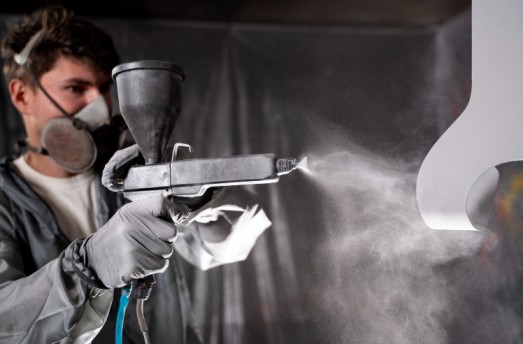
Powder coating is a dry finishing process that applies electrostatically charged polymer powder to a surface and then cures it under heat into a hard, durable layer.
Unlike liquid paint, it contains no volatile organic compounds. It also forms a thicker, more impact-resistant finish.
In today’s article, we’ll talk about how the coating process works and what its different types are.
Let’s get started.
How the Process of Powder Coating Works
During powder coating, the surface is first prepared by cleaning parts of oil, grease, rust, scale, and old coatings using degreasing. Next comes the electrostatic application process, in which fine powder particles composed of resins, pigments, and additives are electrically charged by a spray gun. They then stick to the grounded part.
During thermal curing, the coated parts enter a curing oven (typically around 160°C to 204°C for roughly 10 to 30 minutes) where the powder melts, flows, and cross-links into a smooth film.
Main Types of Powder Coatings
Powder coating isn’t one-size-fits-all, and we’ll discuss that here.
We first have thermosets. It’s applied via a chemical reaction that forms permanent cross-links. It also withstands higher temperatures and resist solvents well.
Common chemistries include epoxy, polyester, and polyurethane, which offer high weather resistance.
Next, we have thermoplastics. They melt and flow without chemical cross-linking and can soften again when reheated. They’re typically applied thicker and often used for specialized functional/impact-heavy needs.
Finally, the UV-curable powders cure under ultraviolet light rather than at high oven temperatures, making them suitable for heat-sensitive substrates.
Key Benefits and Limitations
Powder coating creates a tough, baked-on finish that resists wear, corrosion, and fading better than most conventional liquid paints. Heat curing forms a hard barrier that resists scratches, chips, impacts, and daily wear. Many powder-coated finishes last 15-20 years with minimal maintenance.
When it comes to limitations, the powder coating requires a substrate and fixtures that can withstand the heat of curing (unless using specialized low-temp/UV options). Similarly, achieving very thick coats is also harder than with liquid paint. Color changes also require thorough equipment cleaning to prevent contamination.
Qualities of a Good Powder Coating Provider
Always look for providers experienced in your specific sectors (such as automotive, appliances, or heavy industrial parts) and in your part sizes. You can ask for past work samples or client references as well.
Then check whether they adhere to strict curing and quality control standards. A good provider always follows manufacturer bake schedules. They also test samples and provide documentation such as Technical Data Sheets and Certificates of Analysis.
Also ensure that their facility can handle your batch sizes, part dimensions, and monthly volume. A dependable provider always prioritizes on-time delivery and flexibility when schedules shift.
Final Thoughts
You should go for powder coating when you need a tough, long-lasting finish for parts that are exposed to wear. It’s also ideal for automotive parts, tools, machinery, and high-traffic furniture that are subject to constant abrasion. But you should skip it when a damaged powder coat is harder to blend seamlessly on-site than liquid paint.
