



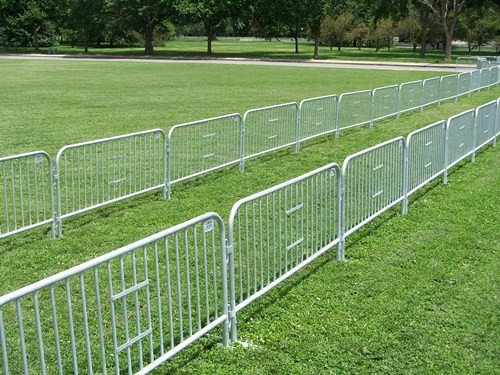
For concerts, festivals, street fairs, and venue entry lines, bike rack barricades are one of the most practical ways to create a strong, visible perimeter without slowing down setup. They are fast to deploy, easy to reposition, and dependable for guiding foot traffic where you need it most. For event planners, government teams, and security providers, this style of barrier is a staple because it works across many layouts, from simple straight runs to complex queue lanes and stage-front lines.
What bike rack barricades are and why they are used so often
Bike rack barricades, sometimes called metal bicycle barriers, are interlocking crowd control barriers designed to form continuous lines. They create a clear boundary that people recognize immediately, which reduces crowd drift and helps staff maintain order in high-traffic areas.
Unlike temporary fencing, they are typically easier to move and reconfigure. Unlike lightweight stanchions, they provide a firmer physical boundary that is better suited for outdoor crowds, busy sidewalks, and areas where people may push forward during peak moments.
Where bike rack barricades work best
These barricades are versatile, but they tend to shine in situations where you need visible separation and steady crowd guidance.
Event entrances and ticketing lines
They help shape queues, keep lanes separated, and create a clear “this is the line” signal. When the barrier line looks official and consistent, guests follow it with fewer questions.
Stage fronts and performance zones
Bike rack barricades are commonly used to protect the front-of-stage area and create a safety buffer for staff. They also help reduce crowd pressure points by defining a firm boundary.
Street festivals and parades
Municipal teams use them to define parade routes, keep spectators away from vehicle lanes, and help enforce closures at key intersections.
VIP areas, restricted zones, and staff corridors
They create a controlled edge around staff-only areas, back-of-house routes, and credential zones without requiring a permanent installation.
Pedestrian routing near loading areas
When vendors, deliveries, and staff movement happen in tight spaces, a barrier line can separate foot traffic from active operations.
What to look for when choosing bike rack barricades
Not all barrier systems perform the same in the field. If you are selecting barricades for repeated deployments, focus on details that affect stability, storage, and crew speed.
Interlocking connection points
A reliable connection method reduces gaps and helps the barrier line behave as one continuous perimeter. It also discourages guests from trying to slip between sections.
Base design and stability
Outdoors, stability matters. A good base helps keep the barricade upright on uneven pavement and during higher crowd pressure.
Weather and finish durability
Outdoor events mean rain, sun, and frequent handling. A durable finish helps reduce rust and keeps the barriers looking clean across seasons.
Storage and transport practicality
If your team runs many events, barrier systems that stack or store efficiently can save time during load-in and reduce warehouse headaches.
Planning your layout for better safety and smoother flow
Barrier choice is important, but layout is what determines whether the plan feels easy or chaotic.
Start with the most crowded decision points
Place barricades early at entrances, corners, and intersections where people hesitate. This reduces last-second crowd clustering.
Build wide approaches that narrow near checkpoints
A wider approach allows people to arrive without compressing into a pinch point too early. Then you can guide them into a narrower lane near screening or ticket scanning.
Keep emergency routes and staff access in mind
Avoid blocking emergency exits or access lanes. If you need controlled openings, plan them intentionally and ensure staff know where they are.
Use consistent run lengths and clear endings
Barrier lines that end abruptly can cause confusion. Make sure it is obvious where the queue starts and where it releases into the entry point.
Pairing bike rack barricades with signage and crowd messaging
A barrier line is also a communication tool. Guests behave better when they understand what the boundary is for.
Use short, functional signs
Messages like Entry, Exit Only, Ticket Help, ADA Access, Staff Only, and Line Starts Here reduce confusion and speed up flow.
Avoid overloading the perimeter with too many messages
Too much signage becomes visual noise. Place signs where guests make decisions, not everywhere.
Consider covers or panels for high-visibility areas
For camera-facing zones or sponsor-heavy events, covers can tidy up the look and make the perimeter feel more intentional.
Operations tips for faster setup and fewer issues
Teams that deploy barricades frequently tend to follow a simple routine.
Stage the barricades by zone
Instead of dumping everything in one pile, stage stacks near the areas where they will be used. It reduces walking time and keeps crews moving.
Assign one person to alignment checks
A straight, consistent run looks cleaner and is harder to challenge. Quick alignment checks also help spot gaps, trip hazards, or weak points.
Keep spare hardware and a basic repair plan
If your barricades rely on connectors or pins, keep extras in a labeled kit. It prevents delays when one small part goes missing.
Renting vs buying for bike rack barricades
Renting often makes sense for one-off events or when storage space is limited. Buying can be more cost-effective for venues, municipalities, and security providers that deploy barriers regularly. A practical way to decide is to look at your yearly event count, storage capacity, and whether your team has the logistics to transport and stage equipment efficiently.
Closing thoughts
Bike rack barricades are a reliable choice for managing crowds because they create clear boundaries, support organized movement, and hold up in demanding environments. When you pair the right barricade system with a thoughtful layout and simple signage, you can reduce confusion and improve safety without adding complexity for staff. For barrier options and other crowd control equipment designed for event and municipal use, you can review solutions from Epic Crowd Control.
