



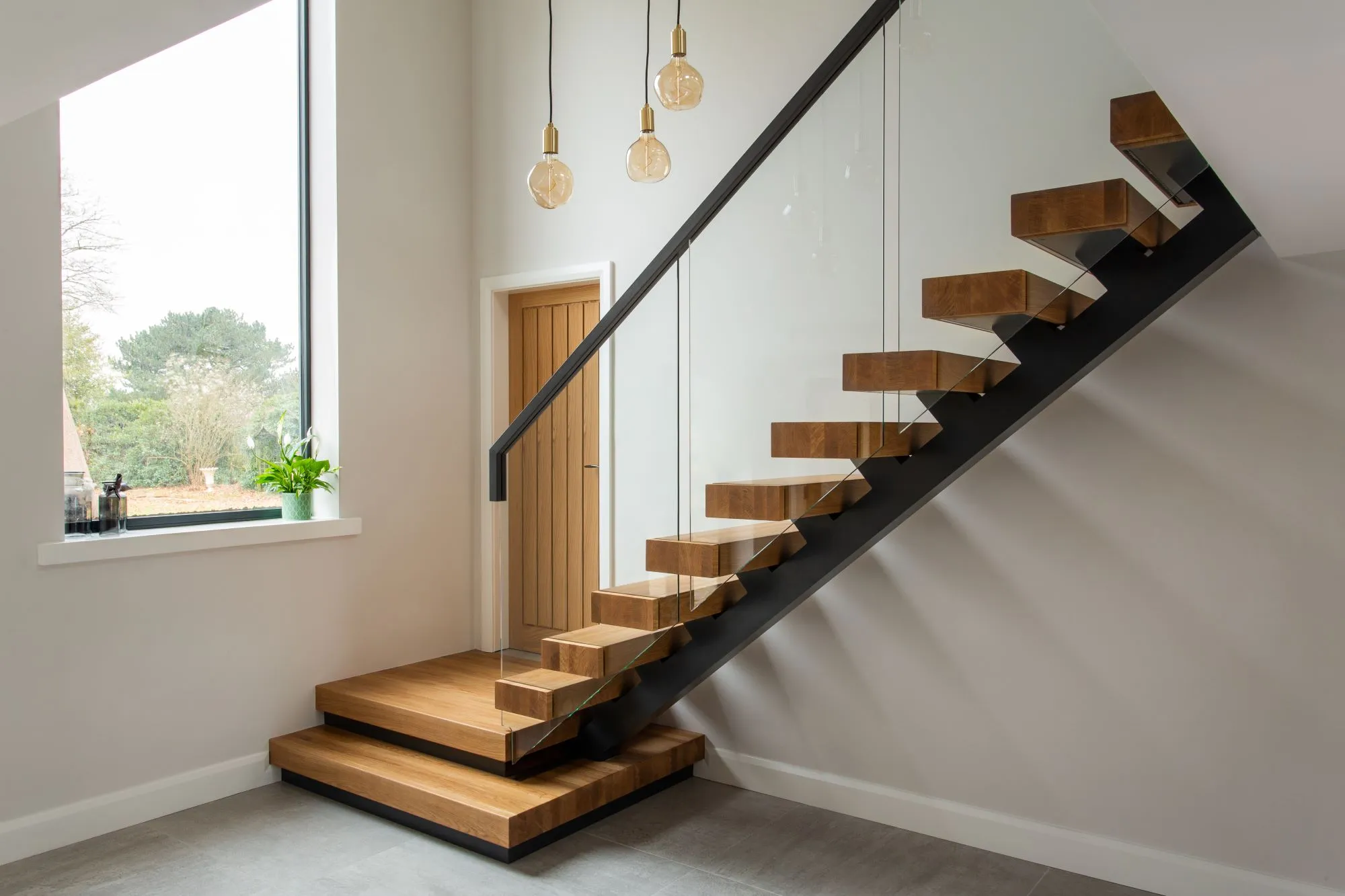
In the architectural hierarchy of a home, the staircase is a unique paradox: it is a primary aesthetic focal point, yet it must perform as a heavy-duty machine subjected to thousands of pounds of percussive force every year. For designers and builders, the selection of oak stair treads is not merely a stylistic preference but a calculated decision based on the mechanical properties of the timber. As the most trusted hardwood in North American millwork, oak offers a specific combination of density, shear strength, and dimensional stability that ensures a staircase remains safe, silent, and structurally sound for over a century.
The Janka Hardness Scale and Impact Resistance
To understand the superiority of oak, one must look at its rating on the Janka Hardness Scale, which measures the resistance of a wood species to denting and wear. Red Oak (1,290 lbf) and White Oak (1,360 lbf) sit at the “sweet spot” of the scale. They are hard enough to resist the crushing force of high heels and heavy furniture moves, yet they possess enough elasticity to be milled into complex shapes without becoming brittle.
Unlike softer woods like pine or poplar, which will develop “troughs” in the path of travel within a decade, oak’s ring-porous structure maintains its surface integrity. The dense summerwood fibers act as a natural armor, protecting the tread from the daily abrasion of grit and footwear.
Cellular Anatomy: Red Oak vs. White Oak
While both species are excellent choices, their microscopic anatomy dictates their specific use cases. Red oak features open pores that allow for deep stain penetration, making it the favorite for homeowners seeking specific color matching. White oak, conversely, has pores plugged with tyloses—balloon-like outgrowths that make the wood nearly waterproof and exceptionally rot-resistant.
From a structural standpoint, both species offer high “modulus of elasticity.” This is critical for stair treads, which often act as a bridge between two stringers. Oak’s ability to flex slightly under load and return to its original shape without cracking is what prevents the catastrophic failure of a step.
Acoustics and the “Solid” Feel
One of the hallmarks of high-end construction is acoustic dampening. Thin, engineered treads or softwoods often produce a hollow, percussive sound when walked upon. Solid oak treads, particularly those with a thickness of 1.25 inches or more, act as a natural acoustic buffer. The mass of the hardwood absorbs the kinetic energy of a footfall, converting it into heat rather than sound. When properly fastened to the stringers and risers, oak components eliminate the mechanical friction that causes audible squeaks, providing that “solid” feel that homeowners associate with quality craftsmanship.
Sustainability and Lifecycle Analysis
In today’s green-building environment, oak is a standout performer. It is a slow-growth, carbon-sequestering material that is managed under strict North American forestry regulations. Furthermore, its longevity is its greatest environmental asset. A solid oak staircase can be sanded and refinished multiple times over 100 years. This “repairability” factor significantly reduces the carbon footprint of a home by eliminating the need for the manufacturing and transport of replacement synthetic materials every 15–20 years.
Sourcing for Precision
The success of a staircase installation is dependent on the moisture content and milling precision of the raw materials. If wood is not properly kiln-dried to a consistent 6–9% moisture level, it will shrink once installed in a climate-controlled home, leading to gaps and safety hazards. By choosing a dedicated manufacturer like Wood Stair Co., architects and builders ensure they are starting with premium-grade lumber that has been engineered for stability. Investing in high-quality oak components is the most reliable way to turn a functional necessity into a permanent architectural legacy.
