



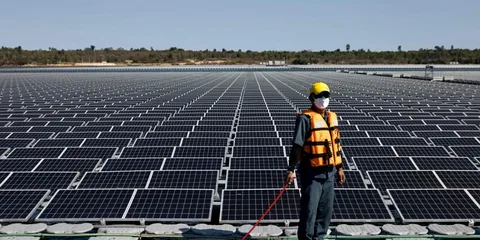
Thailand’s energy landscape is shifting quickly, and both homeowners and industrial operators are taking notice. Rising electricity costs, growing environmental awareness, and government incentives have all contributed to a surge of interest in solar technology. Whether it’s a rooftop system on a family home or a large-scale installation powering a manufacturing plant, solar energy is no longer a niche investment — it’s becoming a mainstream solution. This article explores the key trends, benefits, and considerations shaping the solar market today.
The Rise of โซล่ารูฟท็อป in Residential Areas
For many Thai households, โซล่ารูฟท็อป has become an attractive way to reduce monthly electricity bills while contributing to a cleaner environment. Rooftop solar systems are relatively easy to install on most home designs and can be scaled according to a family’s energy needs.
Some of the main reasons homeowners are moving toward rooftop solar include:
- Lower long-term electricity costs
- Reduced dependence on the public grid
- Increased property value
- A smaller household carbon footprint
As solar panel prices continue to decline and inverter technology becomes more efficient, the payback period for a typical residential system keeps getting shorter, making it a more practical investment for everyday families.
Understanding โซล่าเซลล์โรงงาน for Industrial Use
While residential solar adoption is growing, the real momentum in Thailand’s clean energy transition is happening at the industrial level. โซล่าเซลล์โรงงาน systems are designed to handle much higher energy demands than home installations, often covering large rooftop areas or open land near production facilities.
Factories that adopt solar cell systems typically benefit from:
- Significant reductions in operational energy costs
- Greater energy independence during peak production hours
- Improved sustainability credentials for export markets
- Long-term protection against fluctuating utility rates
Given the scale of industrial energy consumption, even a modest percentage reduction in grid reliance can translate into substantial savings over the lifetime of the system.
Steps Involved in ติดตั้งโซล่าร์โรงงาน
Successfully completing ติดตั้งโซล่าร์โรงงาน requires careful planning, since factory environments involve unique structural, electrical, and safety considerations. A well-executed industrial solar project generally follows these stages:
- Site assessment — evaluating roof condition, available space, and shading factors
- System design — sizing the array and inverter setup according to energy consumption patterns
- Permitting and compliance — ensuring the installation meets local regulations and utility requirements
- Installation and testing — mounting panels, wiring systems, and verifying performance
- Ongoing monitoring — tracking output and maintenance needs over time
Because industrial sites often operate continuously, minimizing downtime during installation is a key priority for facility managers.
The Role of Smart Inverter Technology
One of the biggest advancements driving solar adoption — for both homes and factories — is smart inverter and monitoring technology. Modern systems allow owners to track panel-level performance, quickly identify underperforming units, and optimize energy output even when parts of an array are shaded or dirty.
SolarEdge is one of the companies known for this type of module-level power optimization technology, which is increasingly used in both residential and commercial-scale projects. By integrating optimizers with each panel, systems using SolarEdge technology can help maximize energy harvest and simplify long-term maintenance, which is particularly valuable for large industrial arrays where diagnosing issues manually would otherwise be time-consuming.
Who Benefits Most from Solar Adoption?
Solar energy investment isn’t limited to a single type of user. In Thailand, the market spans several groups:
- Residential homeowners looking to cut electricity bills and adopt greener living habits
- Commercial and industrial developers seeking to lower operating costs at scale
- System integrators and installers who design and deploy these projects for clients
- Utility-scale developers building larger solar farms to support broader energy grids
Each group has different priorities, but all share the same underlying motivation: reducing long-term energy costs while supporting a more sustainable power supply.
Key Considerations Before Going Solar
Before committing to a solar project, whether residential or industrial, it helps to evaluate a few important factors:
- Available roof or land space and its orientation to sunlight
- Local grid connection policies and net metering options
- Expected return on investment based on current electricity rates
- Reputation and experience of the installation provider
- Long-term maintenance and monitoring requirements
Taking time to assess these details upfront can prevent costly mistakes and ensure the system performs as expected for years to come.
Looking Ahead
As Thailand continues to modernize its energy infrastructure, solar power is expected to play an increasingly central role — both in individual households and across the industrial sector. Technologies that improve efficiency and simplify monitoring, such as those offered through SolarEdge, are helping make solar systems more reliable and easier to manage for a wide range of users.
Whether you’re a homeowner exploring rooftop options or a business planning a large-scale factory installation, understanding the fundamentals of solar technology is the first step toward making an informed decision.
To learn more about solar solutions and smart energy technology, visit:
https://www.solaredge.com/th/
Contact US
Address: Sukhumvit Rd, Bang Chak, Phra Khanong, Bangkok 10260
Phone: 1800012369
Email: [email protected]
Website: https://www.solaredge.com/
