



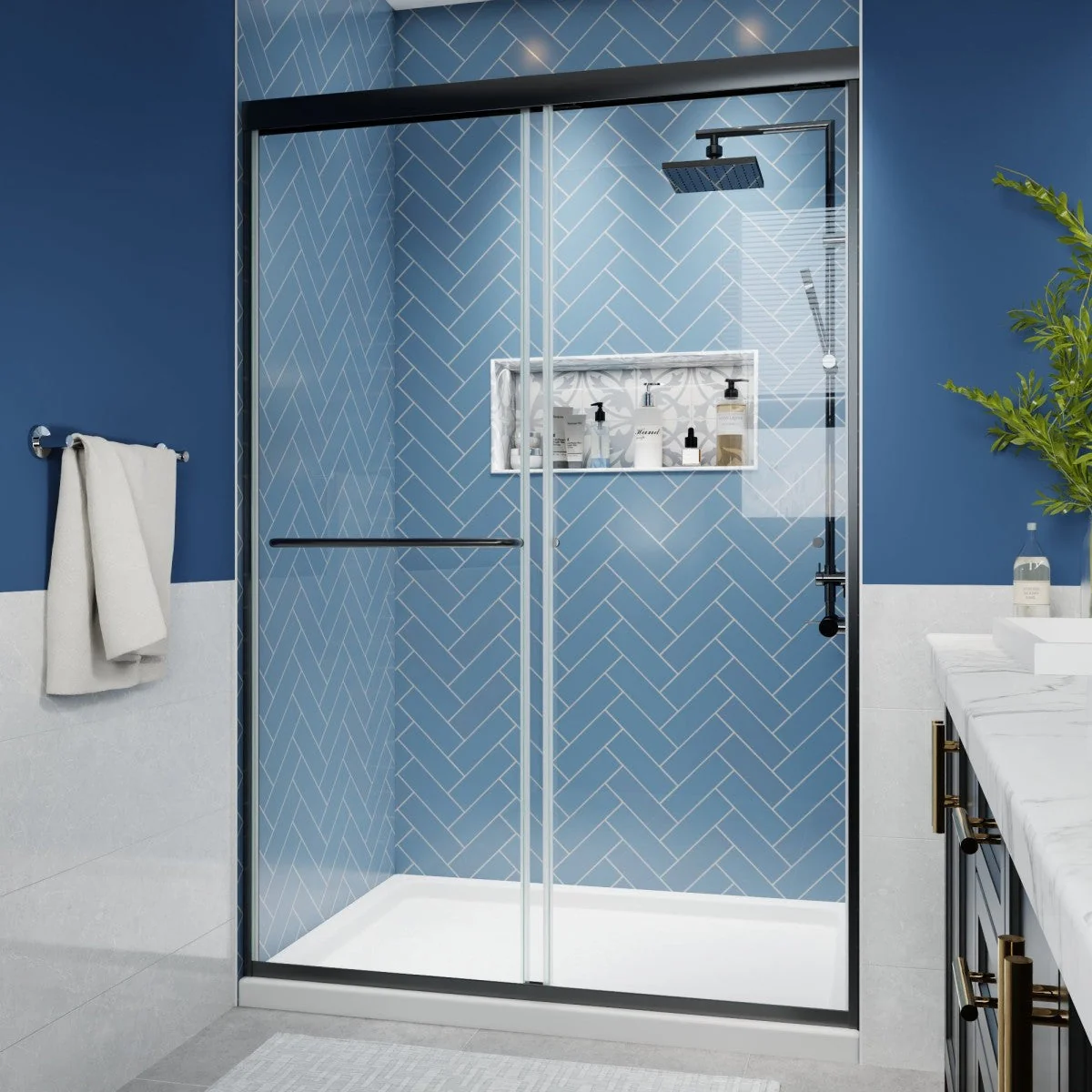
A shower curtain does the job, but it rarely looks like it was chosen on purpose. That’s the main reason so many bathroom remodels now default to glass shower doors instead — they make a small wet room feel larger, let tile and fixtures stay visible instead of hidden behind fabric, and hold up far longer than a curtain that needs replacing every year or two.
The decision isn’t just glass versus curtain, though. Once you commit to glass, there are several sub-decisions — frame style, glass thickness, door configuration — that determine whether the final result feels custom-fit or slightly off.
Why Glass Has Become the Default Choice
Beyond appearance, glass solves a few practical problems that curtains and fiberglass surrounds don’t. It doesn’t trap moisture the way fabric does, which means less mildew buildup over time. It also doesn’t billow or cling to skin mid-shower, which sounds minor until you’ve lived with a curtain that does exactly that.
There’s also a resale angle worth mentioning: glass shower enclosures are one of the upgrades buyers notice during a walkthrough, in a way that a clean curtain rarely registers as an upgrade at all.
Framed, Semi-Frameless, or Frameless: The First Decision
This is usually where the real cost and style differences start to show up:
- Framed doors use aluminum framing around the full perimeter of the glass, which is the most budget-friendly option and the easiest to install, but the visible metal edge reads as more traditional
- Semi-frameless doors use framing only at the hinges and handle, with the rest of the glass edge left exposed, striking a middle ground on both price and appearance
- Frameless doors use thicker glass (typically 3/8″ to 1/2″) with minimal or no visible metal, giving the cleanest, most modern look — at a noticeably higher price point due to the heavier glass and precision hardware required
Frameless has become the most requested style in newer remodels, but framed doors remain a practical choice for anyone prioritizing budget or a faster install.
Door Configuration and Layout
The shape of the shower itself usually decides which configuration makes sense:
- Pivot doors swing on hinges like a standard door and work well for walk-in showers with enough floor clearance
- Sliding doors run on a track and are the standard choice for tub-shower combos, where a swinging door isn’t practical
- Neo-angle doors fit corner showers with an angled front panel, common in smaller bathrooms where a corner install saves floor space
- Fixed panels with a separate door allow one section of glass to stay stationary while only part of the enclosure opens, often used to frame a shower without enclosing it completely
Measuring the existing shower base and rough opening before ordering matters more here than in almost any other bathroom fixture category, since glass panels are cut to size and rarely forgiving of a mismeasured opening.
Hardware and Glass Details Worth Comparing
A few specifics separate a durable installation from one that starts showing problems within a year or two:
- Glass thickness — thicker glass (3/8″ or more) is more common on frameless doors and tends to feel sturdier when opened and closed
- Hardware finish — brushed nickel, matte black, and chrome are the most common options, and matching the finish to existing faucet hardware avoids a mismatched look
- Coating — some glass comes pre-treated with a water-repellent or anti-scale coating, which noticeably reduces the hard-water buildup that makes glass look cloudy over time
- Hinge quality — self-closing hinges are worth prioritizing on pivot doors, since they prevent the door from drifting open on its own
Installation and Maintenance Notes
A few practical points worth planning around before ordering:
- Frameless doors are heavier and generally require professional installation rather than a DIY approach
- A perfectly level shower base and wall are necessary for a frameless door to seal properly, so older or slightly uneven bathrooms may need shimming during install
- Routine squeegeeing after each shower is the single most effective way to prevent water spots and buildup, regardless of coating
The Takeaway
Choosing between framed, semi-frameless, and frameless glass shower doors comes down to budget, the shape of the existing shower, and how much visual weight you want the frame itself to carry. Retailers specializing in bathroom fixtures, including Allsumhome, carry a range of configurations across these styles, which makes it easier to match the door to the shower rather than settling for whatever’s closest to the existing opening.
