



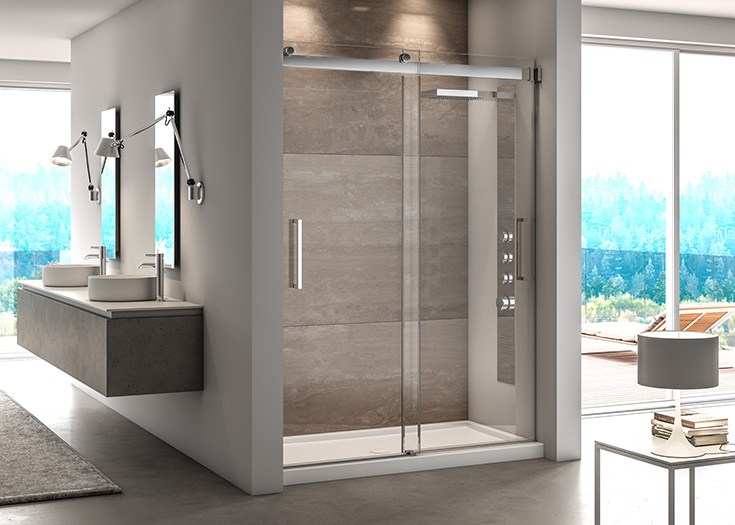
Swapping a shower curtain or an old fiberglass enclosure for glass shower doors is one of the fastest ways to make a bathroom look larger without touching a single wall. The change is mostly visual, but the decision underneath it involves a handful of details that are easy to skip past in a showroom and much harder to fix after installation, once the opening has already been cut for a specific configuration and there is no easy way to start over.
Why It Matters More Than It Looks
A shower door gets used, wet, and cleaned daily, which makes it one of the highest-wear fixtures in the entire bathroom.
Problems a looks-only choice tends to reveal
- Water escaping past the seal and pooling on the bathroom floor
- Hardware that corrodes or loosens faster than expected in constant humidity
- A door that swings into a tight space and clips the vanity or toilet
- Glass that shows water spots and streaks within days of a deep clean
None of these are glass quality issues on their own. Most trace back to the wrong configuration being chosen for the room rather than a bad product, and by the time the problem is obvious the door is already installed.
Framed, Semi-Frameless, or Frameless
The frame style is the first fork in the decision, and it affects both price and long-term maintenance.
Distinctions worth knowing
- Framed doors use metal channels around every edge, which adds stability but also adds more surfaces where mineral buildup and mold can collect
- Semi-frameless doors keep a metal frame on the hinge side only, balancing cost against a cleaner look
- Frameless doors rely on heavier tempered glass, typically in the 3/8 to 1/2 inch range, to stay rigid without a surrounding frame
- Tempered glass is standard across nearly all current shower doors, since it is designed to break into small, blunt pieces rather than sharp shards
The frameless look reads as more modern, but it also means less forgiveness for an out-of-square opening, so accurate measurements matter more with this style than with a framed one, and a slightly uneven wall can show up as a visible gap along the edge.
Hinged, Pivot, or Sliding
The door’s swing pattern depends almost entirely on the shape of the shower and the space in front of it.
Worth weighing
- Hinged doors need clear floor space to swing open, which can be tight in a small bathroom
- Pivot doors rotate on a top and bottom pin rather than side hinges, useful when wall space is limited
- Sliding or bypass doors work well for a tub-shower combination where an outward swing is not practical
- A fixed glass panel paired with a single door is common for walk-in showers with no threshold
Hardware finish, chrome, matte black, brushed nickel, is largely a style choice at this point, though it should match or intentionally contrast with the faucet and shower head already installed rather than being picked in isolation.
Installation Details That Get Overlooked
A shower door installation lives or dies on measurements taken before the glass is ordered, not after.
Confirm before placing an order
- The exact opening width at both the top and bottom, since tile work is rarely perfectly square
- Whether the shower pan or base has a lip that changes the door’s bottom clearance
- The direction of water flow inside the shower, which determines which side the door should seal against
- Wall material behind the hinge side, since a heavier frameless door needs solid backing rather than just drywall
A door sweep or bottom seal, though easy to overlook, is usually what determines whether water actually stays inside the enclosure once the door closes, more so than the glass thickness or the hardware finish.
Glass shower doors are one of the renovation choices that pays off in day-to-day use as much as in resale value, since a well-fitted door solves the leak and mildew problems a curtain never quite avoids. The right configuration also tends to last longer, since a door matched to the room’s actual shape puts less strain on hinges and seals over time. Retailers such as Allsumhome list configuration options and measurement guidance by shower type, which makes it easier to match a door to the exact opening before anything gets cut or installed.
