



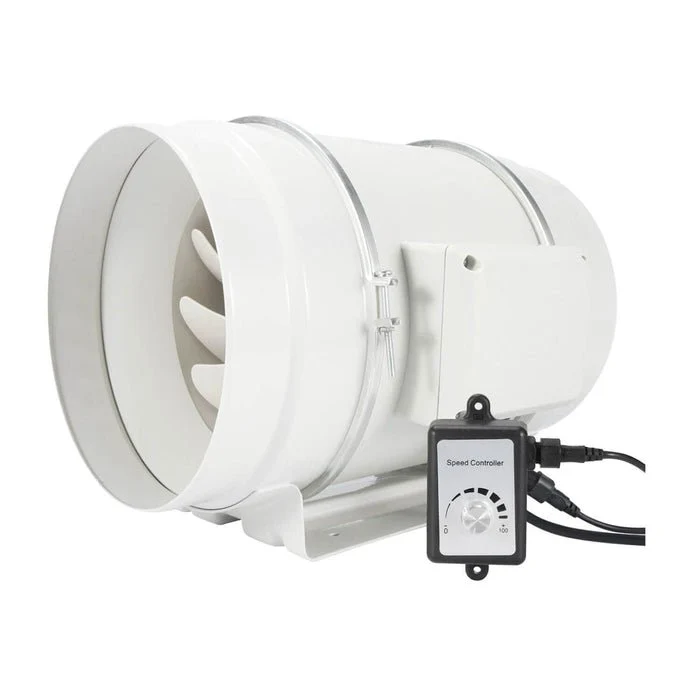
Weak airflow can leave a room uncomfortable even when the heating, cooling, or ventilation equipment appears to operate normally. Long duct runs, several fittings, and restrictive layouts can make it harder for air to reach its intended destination. An inline booster fan may help move air through a selected duct section when the existing airflow needs additional support. Proper diagnosis remains important because a fan should address a confirmed airflow condition rather than hide a larger system problem.
How Does an Inline Duct Fan Work?
An inline fan is installed directly within a duct rather than at a supply register or exhaust grille. Its motor and fan blades assist the movement of air through that duct section.
Depending on the application and control setup, the fan may operate with the main HVAC blower, respond to a switch, or run according to another approved control method. The goal is to support airflow through a specific duct path.
Axial inline fans generally move air in the same direction as the fan shaft. Their compact shape can make them suitable for round duct installations where space is limited. However, the fan must be selected according to the airflow resistance and requirements of the proposed system.
What Causes Weak Airflow in a Duct?
Poor airflow can result from several conditions. Some are related to system design, while others develop as equipment and ductwork age.
Common causes include:
- Long duct runs
- Multiple elbows or sharp turns
- Undersized ductwork
- Crushed or disconnected ducts
- Air leakage at duct joints
- Dirty HVAC filters
- Blocked registers or grilles
- Closed balancing dampers
- Restricted return-air pathways
- Improper blower settings
Before installing a booster fan, contractors should inspect these basic components. Sealing a disconnected duct or replacing a clogged filter may correct the complaint without adding another mechanical device.
Where Can an Inline Booster Fan Be Used?
Inline fans can serve several airflow and ventilation purposes. The correct application depends on the fan model, duct arrangement, and manufacturer’s approved uses.
Possible applications include:
- Supporting airflow to a distant room
- Moving air between selected interior spaces
- Assisting ventilation through a long duct
- Supplying fresh air to a designated area
- Improving circulation in workshops or utility rooms
- Supporting airflow in additions or renovated spaces
A fan designed for general air movement should not automatically be used for every exhaust application. Dryer vents, kitchen exhaust systems, radon systems, and other specialized installations may require purpose-built or listed equipment. Contractors should confirm that the chosen product is suitable for the exact air stream and operating conditions.
What Problems Will a Booster Fan Not Fix?
A booster fan cannot increase the heating or cooling capacity of undersized equipment. It also cannot correct major duct-design problems, inadequate return air, or poor building insulation.
If several rooms are uncomfortable, the entire system may need to be evaluated. Adding a fan to one branch could change pressure and airflow elsewhere. Contractors should examine the complete supply-and-return arrangement before modifying one duct run.
Homeowners should also consider whether the room has:
- Significant air leakage
- Insufficient insulation
- Large areas of direct sunlight
- Damaged windows or doors
- An unusually high heating or cooling load
- Furniture blocking the supply or return opening
Addressing these conditions may provide better results than adding mechanical airflow assistance.
How Should a Fan Be Selected?
Fan selection should begin with the duct size and desired airflow. The fan must fit the duct and provide suitable performance under actual system resistance.
Free-air ratings alone may not show how a fan will perform after it is installed. Duct length, fittings, grilles, filters, and pressure inside the system can affect delivered airflow.
Contractors should review:
- Duct diameter
- Existing airflow
- Desired airflow change
- Total duct length
- Number of fittings
- Static pressure
- Available electrical supply
- Noise expectations
- Control method
- Service access
Selecting an oversized fan can create excessive noise or disrupt the balance of nearby branches. A unit that is too small may produce little noticeable change.
Where Should an Inline Fan Be Installed?
The fan should be installed in the direction shown by its airflow indicator. The surrounding duct must be properly supported so its weight does not pull apart connections.
Choose a location that remains accessible for inspection, cleaning, and replacement. Permanently enclosing the fan behind drywall can make future service difficult and costly.
Installation planning should also account for vibration, wiring, and nearby fittings. Placing a fan immediately beside a sharp elbow or obstruction may affect airflow and noise. All electrical work should follow the product instructions and applicable codes.
How Should the Finished Installation Be Tested?
Contractors should record airflow or room conditions before installation whenever practical. After the fan is operating, verify that air moves in the correct direction and that duct connections remain secure.
Listen for vibration, rattling, or unusually loud airflow. Test the controls through a complete operating cycle and check nearby registers for unintended changes.
Periodic inspection can help identify dust buildup, loose connections, or a motor that no longer starts correctly. Homeowners should keep intake and discharge openings clear and follow the manufacturer’s care instructions.
Start With the Airflow Problem
An inline fan can be a practical addition when testing confirms weak airflow in a suitable duct run. Good results depend on correct sizing, accessible placement, safe wiring, and realistic expectations about what the fan can accomplish.
HVAC contractors, builders, inspectors, and homeowners can visit Suncourts to review axial inline duct fans and find an option suited to their duct size, ventilation purpose, and installation requirements.
